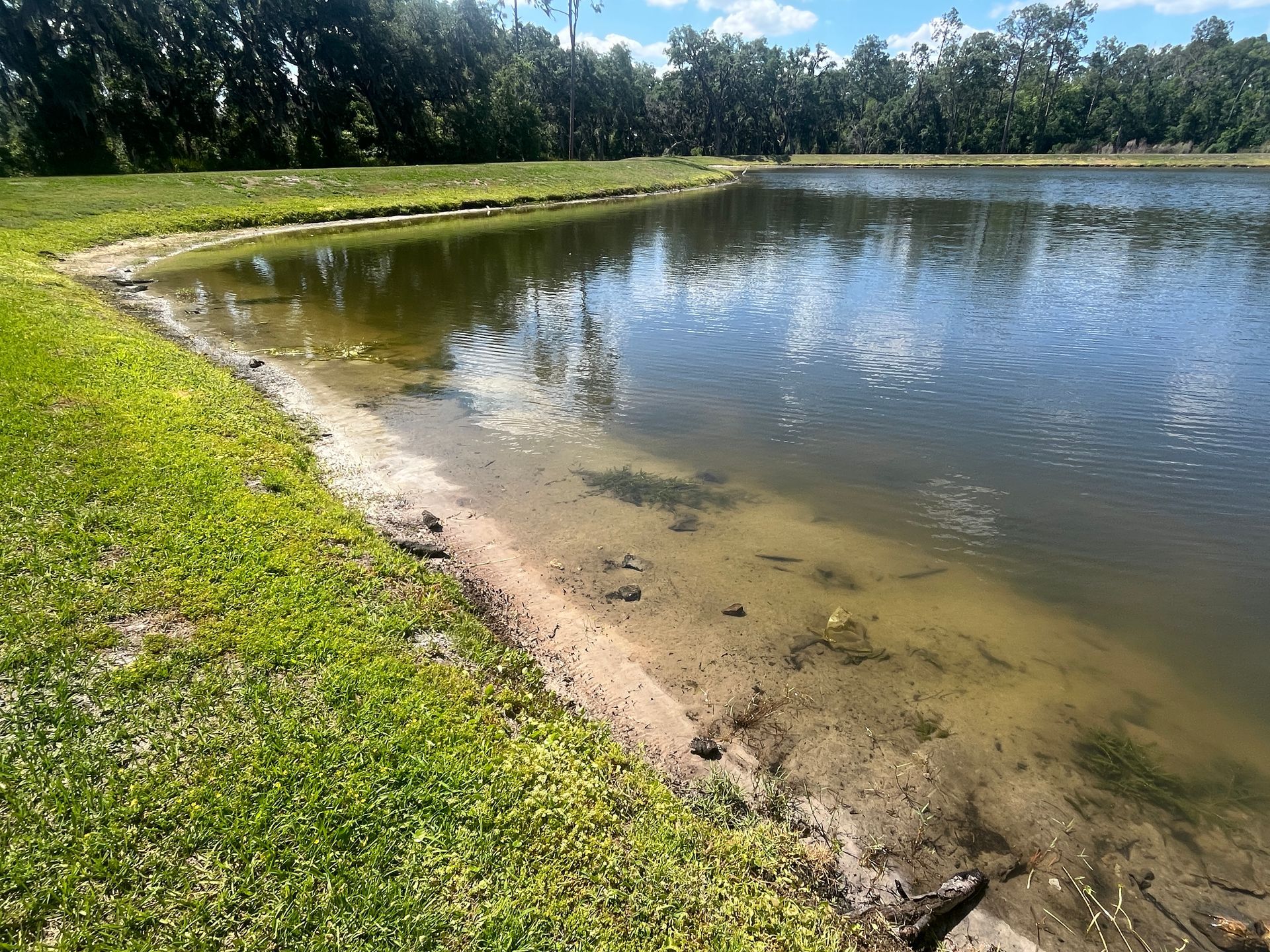
Whether it's a backyard fishing pond, an HOA stormwater pond, or a decorative lake at a commercial property, every shoreline is constantly shaped by water. Rainfall, wave action, fluctuating water levels, runoff, and changing soil conditions all place stress on the pond bank. While some gradual change is natural, active erosion rarely stops on its own. What begins as a small area of exposed soil can eventually develop into a collapsing shoreline, loss of landscaping, sediment buildup, and more extensive future repairs.
At Focal Point Ponds, we help homeowners, HOAs, and property managers throughout the Tampa Bay area restore eroded pond banks and protect shorelines from continued deterioration. Every project begins by identifying why the bank is failing, because long-lasting erosion control isn't achieved by simply replacing lost soil. The most effective solutions address the underlying cause while rebuilding a shoreline that is both stable and visually appealing.
Depending on the site, that may involve reshaping the bank, installing erosion control materials, incorporating natural stone, or establishing deep-rooted native vegetation that helps reinforce the shoreline over time. Our goal is to create a shoreline that not only looks like it belongs there, but continues to perform through Florida's heavy rains, seasonal runoff, changing pond elevations, and continuous seasonal weather.
GET A FREE INSTANT QUOTE TODAY ▼
Free Instant Quote
What Causes Pond Banks to Erode?
Two similar pond banks may fail for entirely different reasons. While erosion often appears to happen suddenly, it's usually the result of several conditions gradually weakening the shoreline over time. Poorly compacted soils, steep embankments, concentrated stormwater runoff, repeated saturation and drying cycles, foot traffic, mowing too close to the water's edge, and changes in shoreline vegetation can all contribute to soil loss. Once the bank begins to deteriorate, each rain event or change in water level can accelerate the problem, causing the shoreline to retreat farther each year.
One of the most overlooked causes of shoreline erosion is the loss of beneficial vegetation. The grasses, native plants, and shoreline vegetation growing along a pond's edge do much more than improve its appearance. Their root systems help bind the soil together, reduce the impact of rainfall, and slow surface runoff before it reaches the water. When those plants are removed, the shoreline often becomes much more susceptible to erosion.
In some cases, repeated herbicide applications or aggressive shoreline vegetation management can unintentionally eliminate many of the plants that naturally stabilize the bank. While aquatic weed control is an important part of maintaining a healthy pond, removing too much vegetation along the shoreline can leave the soil exposed to rainfall, stormwater runoff, and other natural forces that gradually wear away unprotected soil. The shoreline may look cleaner and provide a more open view of the water, but over time the cost of repairing an eroded bank and restoring the lost vegetation can far exceed the savings of aggressive spraying.
Every pond responds differently to these conditions. A shoreline with a gentle slope and healthy vegetation may remain stable for years, while another pond with poor drainage, concentrated runoff, or recurring changes in soil moisture may begin showing signs of erosion much sooner. That's why successful pond bank stabilization starts with understanding what caused the problem in the first place. Simply adding more soil or filling in washed-out areas rarely provides a lasting repair if the underlying conditions remain unchanged.
Why Early Repairs Are Usually Less Expensive
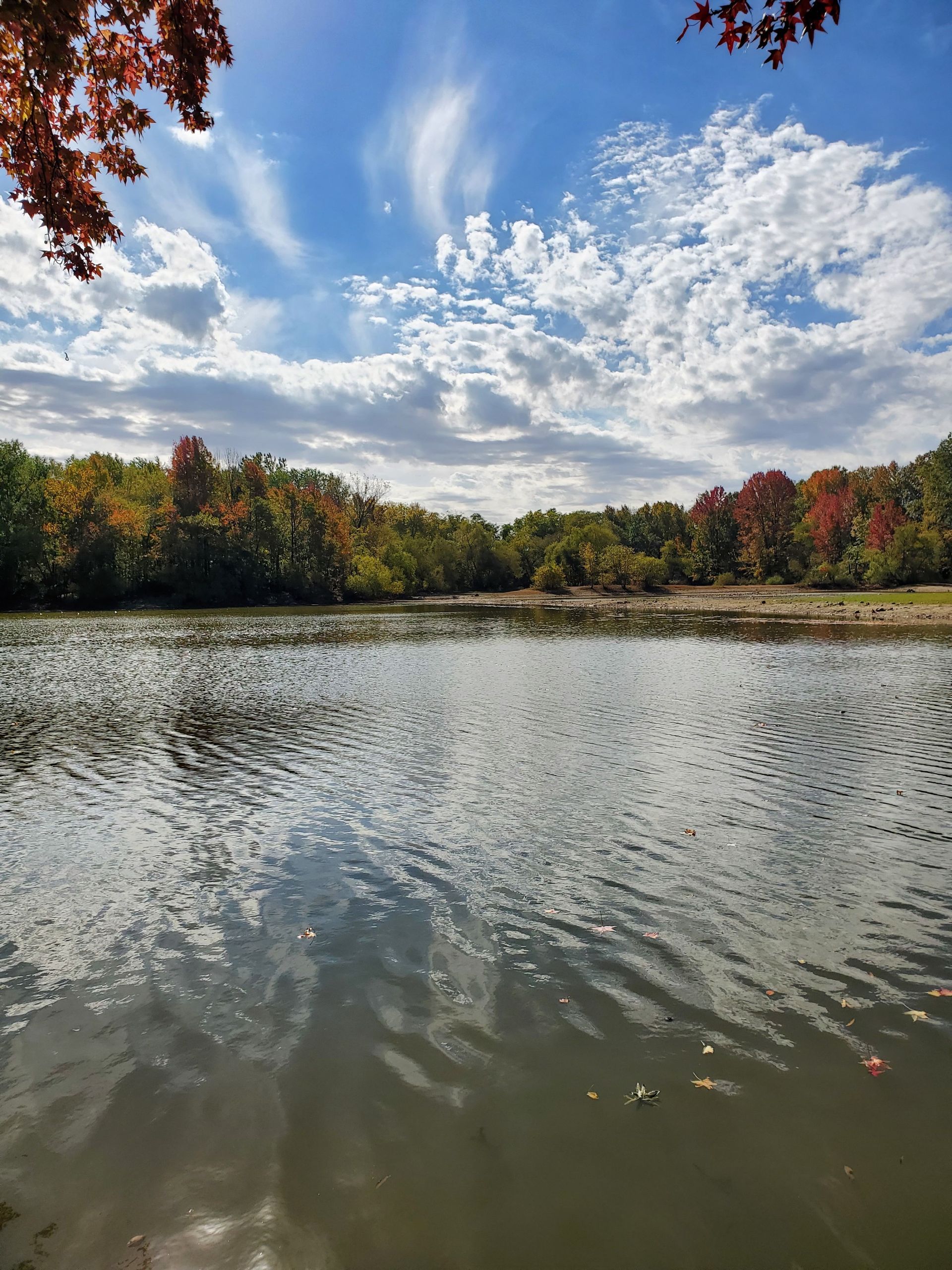
Pond bank erosion rarely remains confined to one small area. As the shoreline continues to deteriorate, repairs often become more extensive because additional soil is lost and larger sections of the bank require restoration. Addressing erosion early can help limit the scope of the project while preserving more of the existing shoreline.
The soil that washes off the bank doesn't disappear—it settles in the pond. Over time, this sediment buildup can reduce water depth, affect water quality, and increase future maintenance requirements. By stabilizing the shoreline before erosion becomes more severe, property owners can often avoid more involved restoration work later.
Pond Bank Stabilization Methods
Once the source of the erosion has been identified, the next step is selecting the stabilization methods that best match the site's conditions. Factors such as bank slope, soil composition, water depth, drainage patterns, existing vegetation, and the severity of the erosion all influence which repair method will provide the best long-term results. In many cases, combining several stabilization techniques produces a stronger, more natural shoreline than relying on a single approach.
Regrading the Shoreline
Some pond banks simply become too steep to remain stable. Regrading involves reshaping the shoreline to create a gentler slope that better resists erosion while improving the establishment of grass and native vegetation. Steep drops can create a serious safety hazard too if a child isn't able to easily walk out of the pond should they find their way into the water. Proper grading also helps distribute stormwater runoff more evenly instead of allowing it to concentrate in one area and wash away the soil.
Geotextile Fabrics and Erosion Control Materials
In many situations, reinforcing the soil beneath the surface is just as important as protecting what's visible above it. Geotextile fabrics, erosion control blankets, and similar stabilization materials help hold soil in place while allowing vegetation to become established. These products are often incorporated beneath topsoil, stone, or plantings to strengthen the repaired bank and reduce future soil movement.
Retaining Walls and Structural Reinforcement
Some erosion problems require a more structural solution. Shorelines with severe elevation changes, limited space, or advanced bank failure may benefit from retaining walls or other engineered reinforcement systems. These approaches are typically reserved for situations where grading alone isn't practical or where additional support is needed to protect nearby structures, walking paths, or other improvements.
Riprap Installation
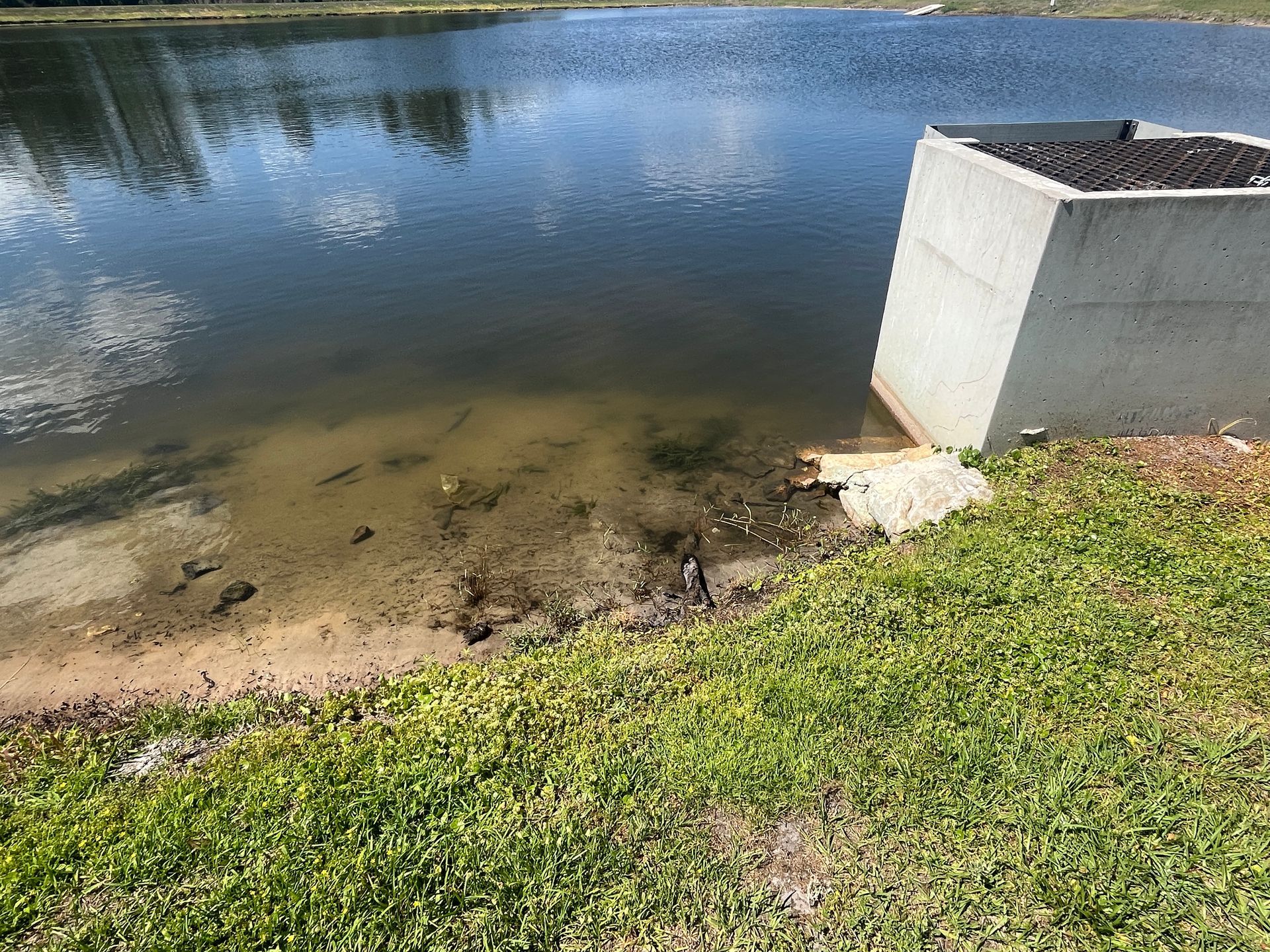
Riprap uses carefully placed stone to protect vulnerable shorelines from erosion caused by moving water, surface runoff, fluctuating water levels, and other conditions that gradually wear away exposed soil. When installed correctly, the rock absorbs energy that would otherwise erode the bank while allowing water to move naturally through the spaces between the stones. Riprap is commonly used around retention ponds, larger lakes, and shorelines that experience repeated water movement or persistent erosion. These are also important to include around water inlets, to protect the banks from overflow water as adjoining ponds or stormwater pipes fill up during heavy rains.
Coir Logs and Natural Shoreline Reinforcement
Coir logs, which are made from natural coconut fiber, provide temporary stabilization while newly planted vegetation becomes established. Positioned along the water's edge, they help prevent trash from blowing into the water, capture sediment, and protect young plantings during the early stages of shoreline restoration. As the vegetation matures, the root systems gradually become the primary source of stabilization.
Native Vegetation and Revegetation
Healthy shoreline vegetation is one of nature's most effective erosion control systems. The roots of properly selected native grasses and plants help anchor the soil, filter runoff, and create a more resilient shoreline over time. When erosion has removed existing vegetation or previous shoreline maintenance has eliminated beneficial plant growth, revegetation can play an important role in restoring both the appearance and long-term stability of the pond bank. They can work to filter the water too, helping to reduce the excess nutrient load in your pond.
Combining Methods for the Best Long-Term Results
All ponds are different, which is why the most successful repairs often combine several stabilization techniques. A project may include regrading, erosion control materials, native vegetation, and strategically placed stone working together as one system. By matching the repair strategy to the specific conditions of the shoreline, it's possible to create a bank that not only resists future erosion but also blends naturally with the surrounding landscape.
Can Pond Banks Be Repaired Without Draining the Pond?
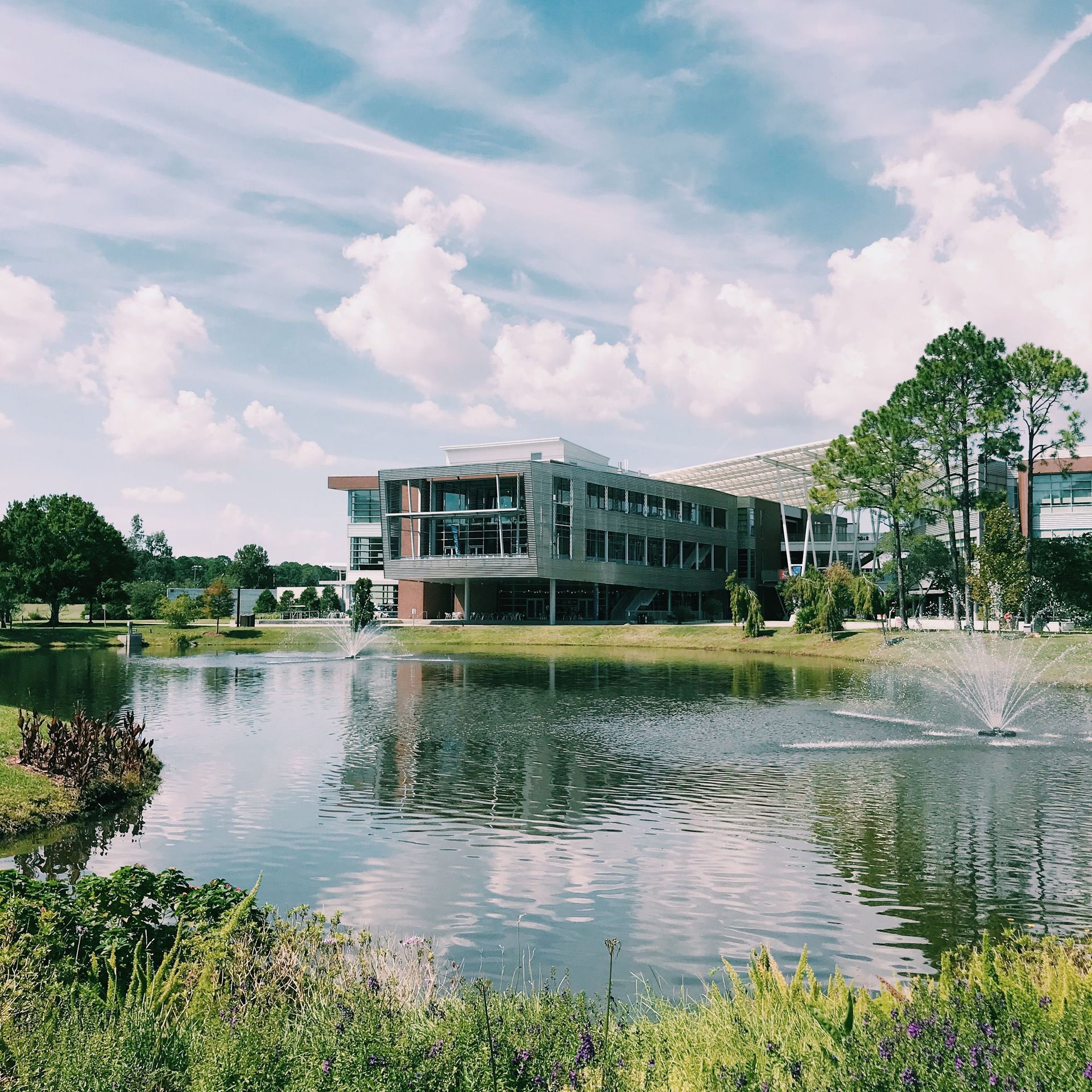
In many cases, yes. The need to lower or drain a pond depends on the location of the erosion, water depth, access to the shoreline, and the repair methods being used. Many stabilization projects can be completed with the pond remaining in service, while others may benefit from temporarily lowering the water level to improve access and working conditions.
For many ponds in Florida, spring can be an ideal time to perform shoreline repairs because water levels are often naturally lower before the summer rainy season begins. Taking advantage of these seasonal conditions can simplify construction and help prepare the shoreline before periods of heavier rainfall.
The best approach depends on the specific conditions of the pond. After evaluating the site, we can recommend the repair method and timing that will provide the most effective long-term results.
Why Pond Bank Stabilization Is Different in Florida
Because so many Florida ponds have sandy soils, experience intense summer thunderstorms and tropical weather systems, plus various drainage demands during seasonal changes in rainfall, shoreline erosion can be accelerated more so than in other parts of the country. Stabilization strategies should be designed around the specific site instead of relying on a standard repair method.
With experience working throughout the Tampa Bay area, Focal Point Ponds understands how Florida's climate and landscape influence long-term shoreline performance. By considering local conditions from the beginning of each project, we can recommend repair strategies that are designed to remain effective through the region's changing seasons and weather patterns.
Proudly Serving the Tampa Bay Area
Focal Point Ponds provides pond bank stabilization and erosion control services for homeowners, HOA communities, property managers, and commercial properties throughout the Tampa Bay area. Whether you're restoring a private pond or maintaining multiple retention ponds within a residential community, we bring the same attention to long-term shoreline performance and practical, site-specific solutions.
We proudly serve Tampa, Clearwater, St. Petersburg, Brandon, Riverview, Wesley Chapel, Oldsmar, Town 'n' Country, Lutz, Odessa, Palm Harbor, Valrico, Plant City, Lakeland, and many surrounding communities throughout Central Florida. If your pond bank is showing signs of erosion, we're happy to evaluate the site and recommend an approach that fits your property and long-term maintenance goals.
Frequently Asked Questions
How do I know if my pond bank needs stabilization?
If you're noticing bare soil along the shoreline, sections of bank that continue to wash away after heavy rains, exposed roots, a gradual slope that's turning into a steeper drop off, or areas that require repeated repairs, it's a good indication that the shoreline should be evaluated. Addressing erosion early is often less involved than waiting until larger sections of the bank have deteriorated.
Is riprap the best solution for every pond?
No. Riprap is an effective stabilization method in many situations, but it isn't the right choice for every shoreline. The best solution depends on factors such as soil conditions, bank slope, drainage patterns, aesthetics, and the purpose of the pond. Many successful projects combine several stabilization techniques rather than relying on a single method.
Can grass alone stop pond bank erosion?
Healthy grass can help protect the soil from minor surface erosion, but grass roots are often too shallow to stabilize banks experiencing significant soil loss. Depending on the site, deeper-rooted native vegetation, structural reinforcement, or other erosion control methods may be needed to provide a long-term solution.
Will my pond bank look natural after it's repaired?
Absolutely. Many stabilization projects are designed to blend with the surrounding landscape by incorporating native vegetation, natural stone, and grading techniques that complement the existing shoreline. The goal is to create a repair that performs well while preserving the appearance of the pond.
Do shoreline stabilization projects require permits?
Permit requirements vary depending on the location of the pond, the type of work being performed, and whether local or environmental regulations apply. During the planning process, we can help determine whether permits or agency approvals are necessary for your project.
How long does a pond bank stabilization project take?
Project timelines vary based on the size of the repair, site access, weather conditions, and the stabilization methods being used. Smaller residential repairs may be completed in just a few days, while larger HOA or commercial projects typically require additional time for site preparation and restoration.
Do you work on HOA and commercial ponds?
Yes. Focal Point Ponds provides shoreline stabilization services for homeowners, HOA communities, apartment complexes, commercial properties, and other organizations responsible for maintaining ponds and retention systems throughout the Tampa Bay area.
GET A FREE INSTANT QUOTE TODAY ▼
Free Instant Quote
Ready to Build Your Farm Lake or Pond in Central Florida?
Contact Focal Point Ponds today to learn more about how we can help you design the perfect water feature for your property. Let’s turn your vision into reality in places like Plant City, Lakeland, Brandon, and greater Tampa.